
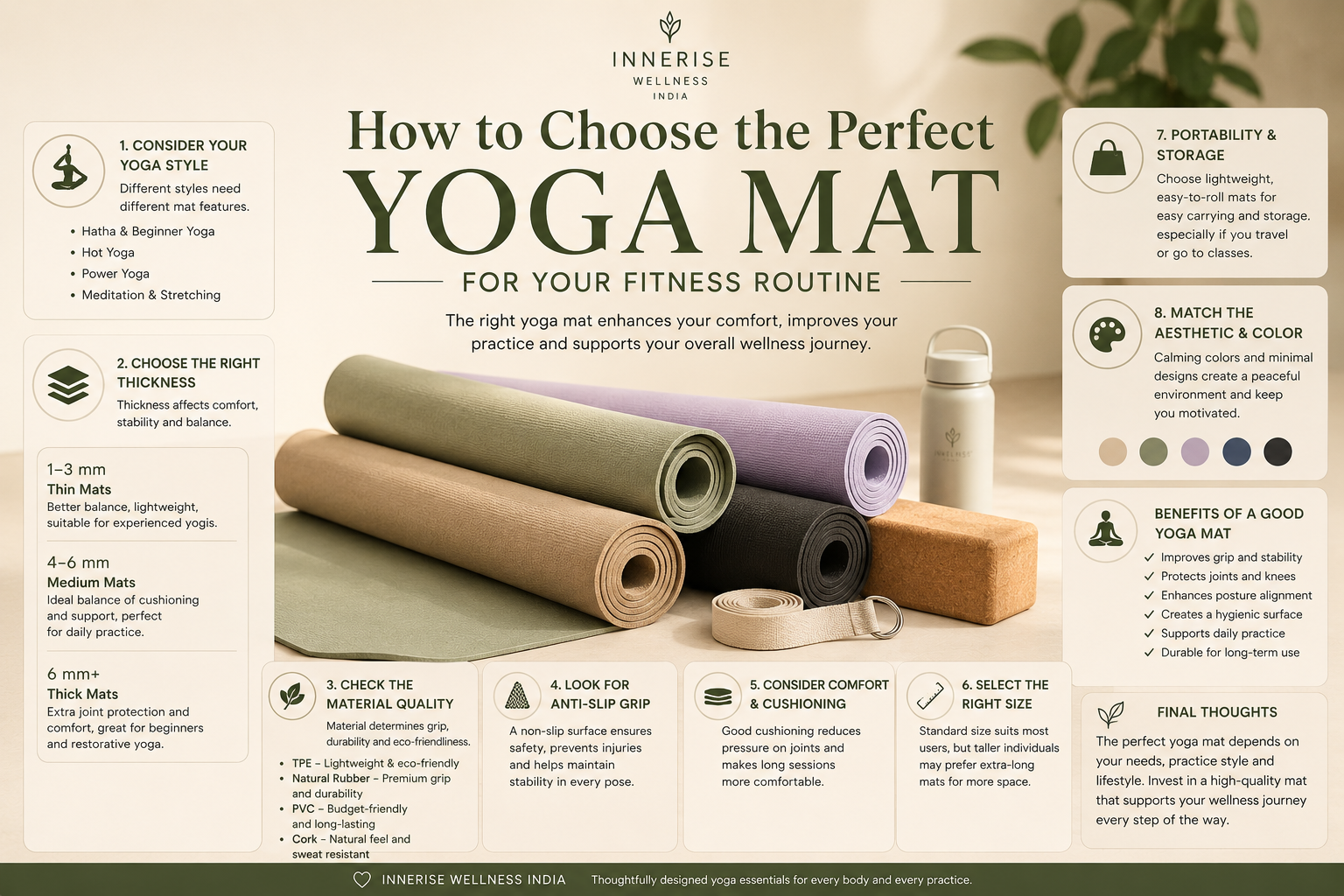
Table of Contents
Choosing the right yoga mat is essential for improving comfort, balance, and overall performance during your yoga sessions. Whether you are a beginner or an advanced practitioner, the perfect yoga mat can enhance your fitness journey by providing the right support, grip, and durability.
Why Choosing the Right Yoga Mat Matters
A high-quality yoga mat helps maintain stability, reduces pressure on joints, prevents slipping, and creates a comfortable personal workout space. Different yoga styles require different types of mats, so selecting the correct one can improve your practice significantly.
1. Consider Your Yoga Style
Different yoga practices need different mat features:
- Hatha & Beginner Yoga: Medium-thickness mats with balanced comfort and grip.
- Hot Yoga: Sweat-resistant mats with strong anti-slip texture.
- Power Yoga: Durable mats with extra grip and cushioning.
- Meditation & Stretching: Softer mats for comfort and relaxation.
2. Choose the Right Thickness
Yoga mat thickness directly affects comfort and stability.
Thin Mats (1–3 mm)
- Lightweight and travel-friendly
- Better balance and floor connection
- Suitable for experienced yogis
Medium Mats (4–6 mm)
- Most popular option
- Ideal balance of cushioning and support
- Perfect for daily practice
Thick Mats (6 mm+)
- Extra joint protection
- Comfortable for knees and wrists
- Great for beginners and restorative yoga
3. Check the Material Quality
The material determines durability, texture, and eco-friendliness.
Popular Yoga Mat Materials
- TPE: Lightweight, eco-friendly, and comfortable
- Natural Rubber: Premium grip and durability
- PVC: Budget-friendly and long-lasting
- Cork: Natural feel with excellent sweat resistance
For sustainable wellness, eco-friendly yoga mats are becoming increasingly popular among yoga practitioners.
4. Look for Anti-Slip Grip
A non-slip yoga mat is important for safety and posture alignment. Good grip prevents sliding during poses and helps maintain stability, especially during intense workouts or sweaty sessions.
5. Consider Comfort & Cushioning
If you experience knee pain or wrist discomfort, choose a mat with extra cushioning. Soft yet supportive mats improve comfort during long yoga or meditation sessions.
6. Select the Right Size
Standard yoga mats usually fit most users, but taller individuals may prefer extra-long mats for better movement and stretching space.
7. Portability & Storage
If you travel frequently or attend yoga classes, lightweight and easy-to-carry mats are ideal. Travel yoga mats are compact and foldable for convenience.
8. Match the Aesthetic & Color
Modern yoga mats are available in calming earthy tones, pastel shades, and minimalist designs that enhance your wellness environment and motivation.
Best Colors for a Calm Yoga Experience
- Beige & Sand – Natural and grounding
- Sage Green – Relaxing and refreshing
- Lavender – Calm and peaceful
- Black – Elegant and professional
- Navy Blue – Focused and balanced
Benefits of a Good Yoga Mat
- Improves grip and stability
- Protects joints and knees
- Enhances posture alignment
- Creates a hygienic workout surface
- Supports daily yoga and meditation practice
- Durable for long-term use
Final Thoughts
The perfect yoga mat depends on your yoga style, comfort preference, grip requirements, and lifestyle needs. Investing in a high-quality yoga mat helps create a safer, more comfortable, and more enjoyable fitness routine.
At Innerise Wellness India, we believe the right yoga essentials can transform your daily wellness practice with comfort, simplicity, and mindful design.